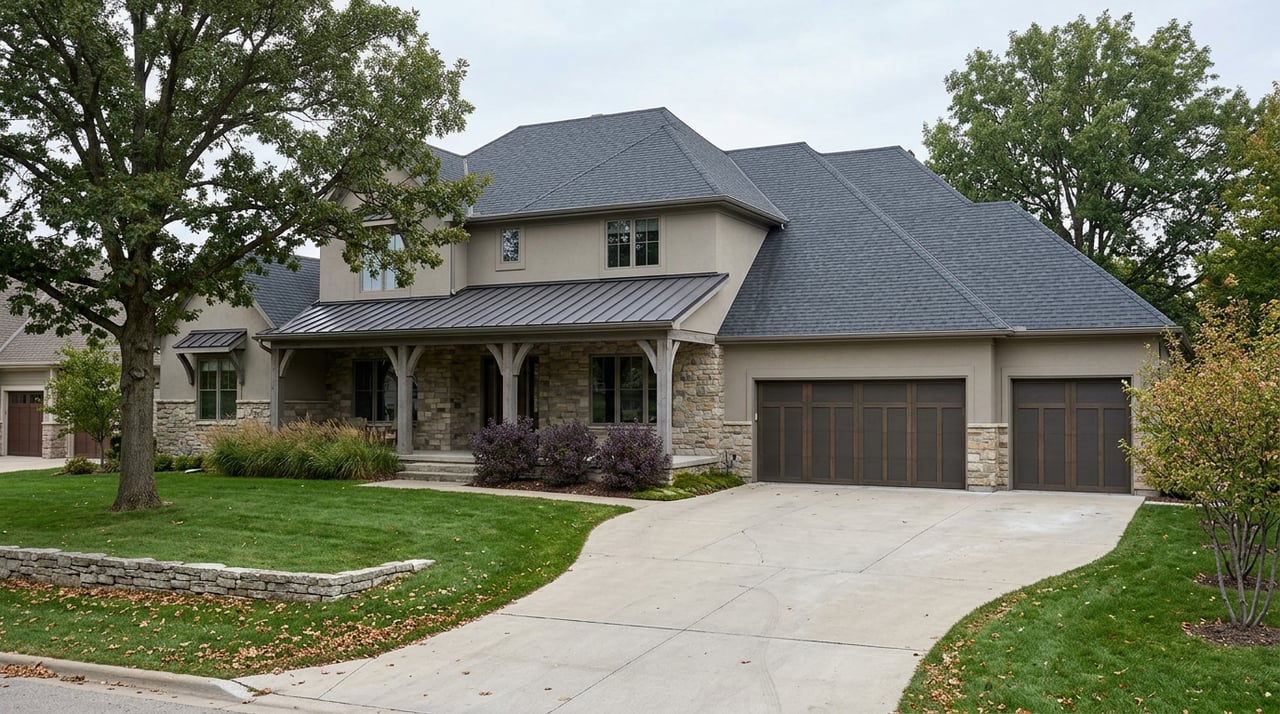
You're standing in a builder's design center in northwest Lincoln, picking cabinet finishes, when the sales rep slides over a cost sheet with a line you don't recognize: impact fee. It's not small. You ask what it covers. The answer, if you get a straight one, is that it pays for the street, water line, and park your new subdivision needed built from scratch, and that the house three miles away in an older part of town never had to pay a dime of it.
That's the gap nobody puts in the listing description. Median price comparisons on the portals treat a new build and a resale as the same kind of purchase with a different price tag. They're not. One of them carries a municipal charge the other is exempt from entirely, and the size of that charge depends on exactly which patch of ground your new address sits on.
What an impact fee actually is
Lincoln's own description is plain: impact fees are charges levied against new construction, changes in land use, or an increase in water meter size, meant to help pay for the infrastructure that new development requires. Build a new single-family home in a growing part of the city and you owe it. Buy a resale home built decades ago in an established neighborhood and you don't, because nothing about that transaction triggers new demand on streets, water lines, or parks.
The city has been calculating the amount due through a formal Impact Fee Determination Form for every applicable project, and the current fee schedule the city cites took effect January 1, 2025. That's the number a builder is handing a buyer today when they sit down at the design center.
Why the fee depends on your zip code, not just your square footage
Here's the part that surprises people who assume a city fee is a flat, citywide number. Lincoln has divided itself into seven separate districts, each with its own account for arterial streets, water distribution, and parks and trails. Money collected from new construction in one district can only be spent on infrastructure inside that same district. A fee paid by a buyer building in southeast Lincoln can't go toward paving a street in the northwest, and vice versa.
That means two buyers putting up nearly identical homes in the same calendar year, in two different growth corridors, aren't necessarily writing the same check. The fee reflects what that specific district's infrastructure fund needs, not a citywide average. If you're comparing new-construction communities across town, the fee itself is one more variable that changes by location, the same way lot premiums and HOA dues do.
The one part of the city where new construction skips the fee entirely
There's a deliberate carve-out built into the same paperwork. The city's Impact Fee Determination Form lists the Downtown Antelope Valley Exclusion Area as an exemption. Build new in that part of the city and the impact fee doesn't apply. Lincoln also runs a separate arterial street impact fee refund program aimed at qualifying employers, another mechanism where the city has chosen to waive or return part of the charge to steer growth toward the urban core rather than the edges.
Neither carve-out is an accident. Lincoln created the impact fee system in the first place because it couldn't keep pace with paving new streets fast enough for the subdivisions springing up at its borders. Back in January 2003, Mayor Don Wesely stood on an unpaved stretch of West Adams Street leading to new homes in northwest Lincoln, at the time not scheduled for paving for another six years, and used it as the case for why the fee needed to exist. Two decades later, the same logic still shapes where the fee applies and where the city has chosen to waive it to encourage infill instead of sprawl.
The fight over who should be paying it
The impact fee has never been uncontroversial. The Home Builders Association of Lincoln sued the city over it, and the case reached the Nebraska Supreme Court in 2006. The builders argued, among other things, that the city didn't have the authority to impose what was effectively a tax without explicit permission from the state legislature. The court disagreed, ruling that Lincoln's home rule charter gave it the implicit power to collect the fee even without that explicit authorization.
The legal question got settled, but the fairness argument didn't go away. Lincoln homebuilder Greg Schwinn put it directly in local reporting: the fee ends up being paid by "our friends and neighbors," his phrase for the fact that one buyer pays substantially more in city charges purely because they chose new construction over a home in an older neighborhood. Coby Mach, president and CEO of the Lincoln Independent Business Association, has made a similar case on the commercial side, saying the fee "adds substantial dollars to projects" and that some businesses have delayed or scrapped projects specifically because of it.
Whether you think that's a reasonable price for new infrastructure or an uneven tax on the buyers who happen to want a brand-new house, the practical point for anyone house hunting is the same. It's real money, it varies by district, and it shows up on one side of the ledger and not the other.
What this means when you're comparing homes
If you've got a new-construction subdivision on your shortlist alongside an older resale home closer to downtown, the sticker prices aren't telling you the whole story. The new build's price already has this fee baked in somewhere, whether it's itemized separately at the design center or folded into the base price by the builder. The resale never had that cost at all. When you're trying to understand why a newer home costs more per square foot than a comparable older one, this fee is part of the answer, not the whole answer, but a real and specific piece of it.
It's also worth asking your builder which of the seven benefit districts your lot sits in and whether that district's fund is funding a project you'd actually benefit from, like a park or a street extension near your home, versus one on the far side of the district boundary. And if you're specifically drawn to infill or redevelopment near downtown, the Antelope Valley exclusion is a real financial incentive working in your favor, not just a planning footnote.
A few questions I get about this
Does this fee show up if I'm buying a resale home? No. It only applies to new construction, a change in land use, or an increase in water meter size. A resale purchase in an established neighborhood doesn't trigger it.
Can I find out the exact fee before I commit to a lot? Yes. The city calculates it through the Impact Fee Determination Form, and your builder should be able to tell you which benefit district your lot falls in and what the current schedule requires.
Does this apply anywhere in Lincoln, or just the growth corridors? It applies to new construction generally, with the Downtown Antelope Valley area specifically excluded. The seven benefit districts cover the rest of the city, so the fee follows new development wherever it happens, not just the edges.
Is this specific to the City of Lincoln, or does it apply in surrounding towns too? This particular ordinance is a City of Lincoln program tied to its home rule charter. If you're comparing new construction in a smaller surrounding community, it's worth asking that municipality directly whether a similar fee structure exists, since the answer isn't the same everywhere.
If you're weighing a new build against a resale, or trying to figure out what a subdivision's location actually costs you beyond the sticker price, I'd rather walk through the real numbers with you than let a portal's median price do the talking. Reach out to Ashley Terry and let's connect.