Drive west out of Lincoln on I-80 this month and you will hit orange barrels before you hit the Seward exit. The Nebraska Department of Transportation is in the middle of widening 9.64 miles of interstate between the Pleasant Dale and Seward interchanges to six lanes, and the project comes with temporary closures on five county roads along that stretch. If you are touring acreages in that corridor this fall, build extra time into your drive and expect a detour or two on the way back.
That inconvenience is a small, physical sign of something bigger happening in the same ground. While crews reroute traffic around Pleasant Dale, the land itself is moving in two directions at once, and most of the coverage you will find about "Nebraska land values" only tells you about one of them.
The headline number is a cropland number
The 2026 Nebraska Farm Real Estate Market Survey, published by the University of Nebraska-Lincoln's Center for Agricultural Profitability, put the state's average all-land value at $3,905 per acre as of February 1, 2026. That is down 1% from the year before, the second straight annual decline after land values peaked at $4,015 per acre in 2024. Land industry professionals surveyed pointed to lower crop prices, elevated input costs, and interest rates sitting above the ten-year average as the reasons.
Read past the headline and the picture splits. Center pivot irrigated cropland averaged 2% lower in 2026, with some regions down 4% to 8%. Gravity irrigated cropland fell 3% statewide. Grazing land and hayland moved the opposite way entirely, up between 4% and 7%, with nontillable grazing land leading the gain at 7% as strong cattle prices pulled more competition into that corner of the market.
Here is what that survey looked like broken down by land type:
| Land class | 2026 statewide trend | What's driving it |
|---|---|---|
| Center pivot irrigated cropland | down ~2% (some regions -4% to -8%) | tight crop margins, high input costs, elevated interest rates |
| Gravity irrigated cropland | down ~3% | same cost and margin pressure |
| Dryland cropland (no irrigation) | down ~1% | lower crop receipts statewide |
| Grazing land (nontillable) | up ~7% | strong cattle prices, competition for grazing acres |
| Hayland | up ~5% | livestock demand tracking cattle market strength |
If you are shopping the row-crop side of Nebraska real estate, "land values are falling" is your market and the number is accurate for you. If you are shopping for five, ten, or twenty acres of established pasture to run a couple of horses or a small herd, you are shopping in the group of numbers on the bottom half of that table, and those went up.
What this actually looks like on the ground in Seward County
I see this split every time I walk a Seward County acreage with a buyer. Land listing data for the county shows an average asking price of roughly $18,470 per acre, but that average blends everything from irrigated row crop quarters to five-acre building lots with a shelterbelt and a barn already standing. It tells you very little about what a specific parcel is worth until you know which side of the cropland-pasture split it sits on.
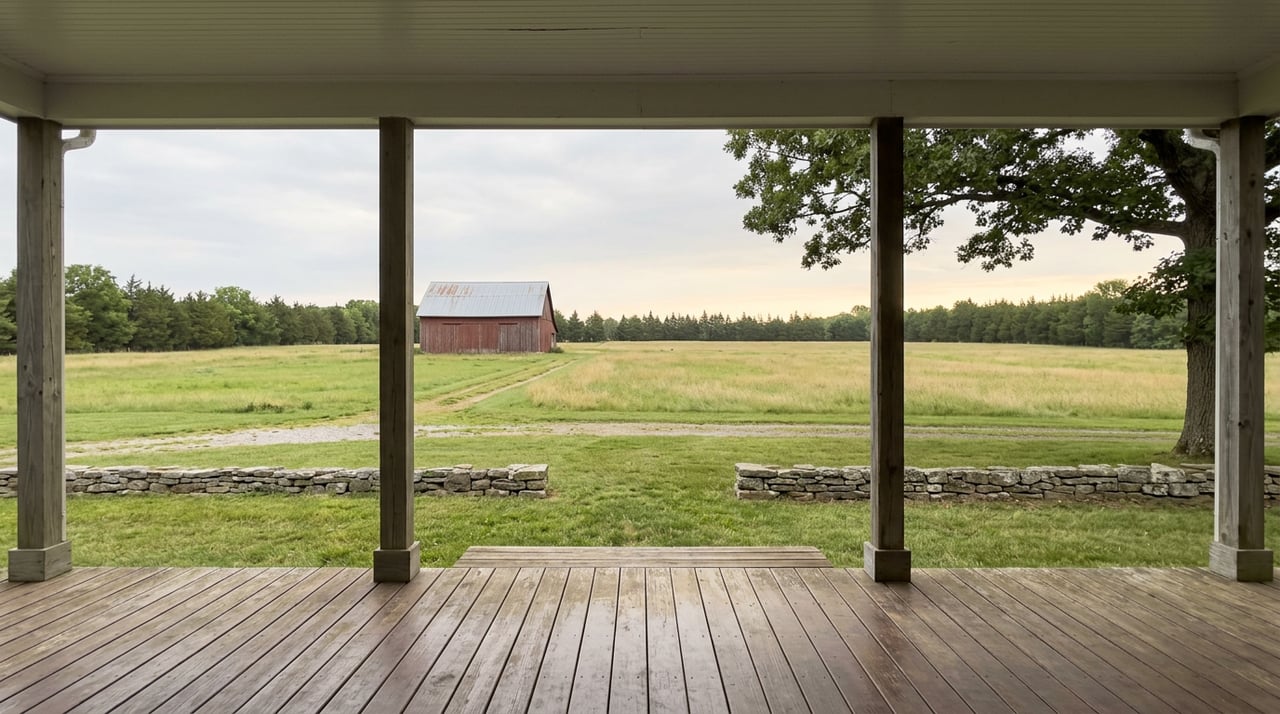
Heritage Farms, the newer acreage subdivision going in less than a mile from the edge of Seward, is a useful example of the pasture side of that ledger. The subdivision offers 5-plus acre buildable lots off 252nd Road, a quarter mile from paved Waverly Road, with lots already carrying established bromegrass pasture and, on at least one parcel, a nearly 5,300 square-foot barn built for livestock with stall space, a wash bay, and dry storage. That is not cropland pricing. That is pasture and infrastructure pricing, in the same land class the UNL survey shows gaining value, not losing it.
If a seller or a listing agent points you to the statewide "land values fell" headline to justify a lower asking price on a pasture-heavy acreage, ask which land class they mean. The number that is actually falling belongs to a different kind of ground than the kind most acreage and equestrian buyers are trying to buy.
Why the pasture side is holding up
The mechanism is straightforward once you see it. Cattle prices have been strong enough to pull more buyers and operators into competition for grazing ground, and that competition is what pushed nontillable grazing land up 7% statewide even while cropland values kept sliding for a second year running. Nebraska crop receipts fell by roughly 16% in 2025, a drop of about $576.6 million, while livestock receipts statewide rose by $3.22 billion over the same period. Money moved from row crops toward cattle, and land values followed the money.
That is a statewide agricultural trend, but it shows up locally too, in the form of steady demand for the kind of ground Seward County offers close to town. Seward's population sat at an estimated 7,919 in 2026, a small but steady gain over the 7,699 recorded in the 2020 census. The Seward County Chamber and Development Partnership has spent the past several years recruiting employers to the Seward-Lincoln Regional Rail Campus, including Petsource's freeze-dried pet food plant, which represented a $75 million investment and 80 new jobs. That kind of steady employment growth keeps a floor under demand for acreages within a short commute of town, the same commute the I-80 project is currently widening to handle.
What this means if you are shopping right now
Three things worth carrying into a fall acreage search in Seward County:
Ask about land class before you compare price per acre. A $400,000 listing on 30 tillable acres and a $400,000 listing on 8 acres of established pasture with a barn are not competing in the same market, even if the county-wide average makes them look similar on paper.
Factor in the I-80 construction timeline while you are touring. Five county roads are seeing temporary closures during the widening project between Pleasant Dale and Seward. If your daily commute runs through that stretch, drive it at the time of day you would actually be commuting before you commit to a property.
Do not assume a falling statewide average means more negotiating room on pasture ground. The data says the opposite for that land class. If anything, a hobby farm or small horse property with usable grazing land and existing fencing is competing in a tighter market than the county-wide numbers suggest.
A few questions I get from acreage buyers this time of year
Does the I-80 widening project affect long-term property values near Pleasant Dale and Seward? Road capacity projects like this one generally improve access over time, which tends to support values in the corridor once construction wraps. In the near term, expect slower commutes and occasional detours on the affected county roads. No official completion date had been announced as of this writing, so plan around the current construction reality rather than an assumed finish line.
Is pasture land a safe bet if cattle prices shift? The 2026 survey data reflects a single year of strong cattle prices pulling grazing land values up. Agricultural land values move with commodity cycles, and a change in cattle prices could change the trend in future surveys. What it tells a buyer today is that pasture and grazing ground is not moving in the same direction as cropland right now, which matters if you are trying to time a purchase against a "falling market" headline that does not actually apply to the ground you want.
Let's talk about what your search actually needs
I live this split every day, on my own Seward County acreage, tending horses between showings. Numbers on a survey are useful, but they only mean something once you match them to the specific acres you are standing on, the fencing that is already up, and the drive you will actually make to Lincoln or back into town. If you are trying to figure out what a particular property in Seward County is really worth, and whether the ground under it is a cropland story or a pasture story, I would like to help you work through it.
Let's Connect with Ashley Terry, a Woods Bros Realty REALTOR® who calls Seward County home.