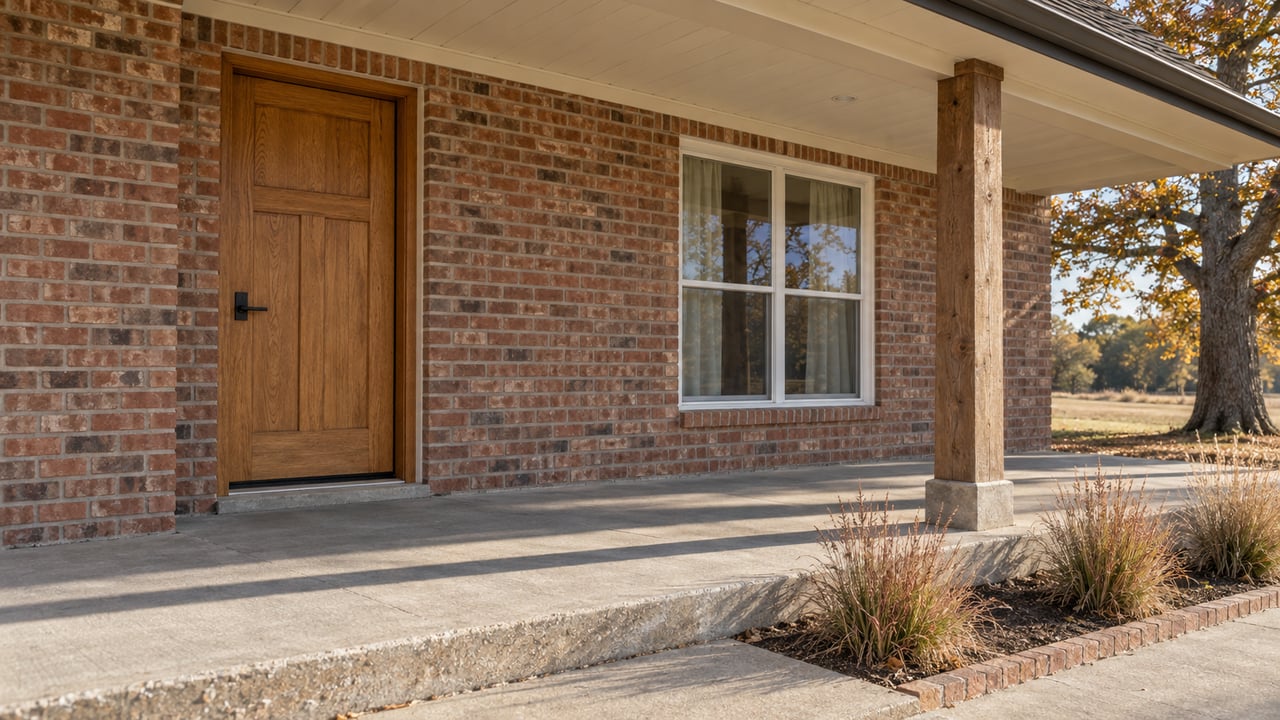
You've found a pretty piece of ground outside Seward. It has a fenced pasture, a shelterbelt on the north side and a gravel road out front. It's bigger than five acres. So can you build a house on it?
Under Seward County's agricultural zoning, the answer depends partly on parcels you'll never walk. The county counts homes by quarter-section, which is a 160-acre block of the survey grid, and once that block hits its limit, no parcel inside it gets another dwelling. The house you're picturing may already have been built by someone else.
That rule is the one I'd want every acreage buyer in Seward County to understand. It matters even more this fall, because the county is partway through rewriting its zoning regulations and has kept this rule in the new draft.
The count lives on the quarter-section
Seward County's two agricultural districts are A-1 and TA-1. The county zoning office lists the maximum density as two dwellings per quarter-section in A-1 and four per quarter-section in TA-1.
The wording in the A-1 regulations matters more than the number:
"The density within any ¼ section of ground shall not exceed two dwelling units. Each parcel shall be given the opportunity for a dwelling unit until the zoning density has been met."
"Opportunity" is the key word. A parcel doesn't own a house right. It has a chance at one until the quarter-section's count runs out. The current rules don't spell out a priority order, and they don't set up a way to move an allocation from one parcel to another. If a parcel sits in two quarter-sections, the applicant declares which one the house will count against.
This changes how you read a listing. A 12-acre tract of bare ground in A-1 country might sit in a quarter-section that already has a farmhouse and an acreage home on it. In that case the zoning leaves it no house to build, and size, soil and views don't change that. Ground that is otherwise identical a mile away might still have one left. Two parcels can look the same on paper and differ completely in what a buyer can actually do with them.
What a mistake in July showed
Earlier this year the county had a real case of this. On July 6, 2026, the county zoning office approved a permit for a 37-by-27-foot wood addition with living quarters on an A-1 property. After looking again, the Zoning Administrator decided the addition was really a separate dwelling and didn't fit the density allowed in that quarter-section. The permit had been issued in error.
On August 4, 2026, the County Board passed Resolution 3943. It ended any challenge to that one structure and said the resolution "shall not constitute precedent for any other property." It also said the resolution grants no continuing right to rebuild or replace the dwelling. If the structure is ever removed, destroyed or left to deteriorate, any new application will be judged under whatever rules are in effect at that time.
Buyers can take two lessons from this. First, a second living space on a property, even one built as an addition, can count against the quarter-section. Second, a structure that is standing today hasn't necessarily been confirmed as a dwelling that can be rebuilt. The paperwork behind each building matters as much as the building does.
Once the count is open, the other gates
Having a house left in the quarter-section is only the first step. The ground still has to clear several other requirements, and each one has caught buyers off guard:
| Requirement | Current rule in A-1 and TA-1 |
|---|---|
| Minimum lot size | 5 acres, per county zoning office guidance |
| Road access | Direct legal access to an improved road |
| Minimum-maintenance roads | Dwellings may not be permitted on land adjoining one |
| Setback from county road | 90 feet from the road centerline |
| Setback from U.S. or state highway | 120 feet from the right-of-way line |
| Minimum lot width | 100 feet in A-1, 200 feet in TA-1 |
| Splitting off a lot under 10 acres | Falls under subdivision rules and needs a plat before a zoning permit |
The road rules tend to surprise people from town the most. A beautiful parcel on a minimum-maintenance road can be great for hunting or grazing and still be off-limits for a home. The split rule matters when a seller offers to "just carve off" a few acres for you. The county zoning office says a Short Form Plat is required to separate land, and the subdivision regulations say no zoning permit can be issued until the tract is platted.
Neighbors with livestock set a second limit
Distance from livestock operations is the other big factor. The current A-1 text has a spacing table for new non-farm homes measured from existing agricultural operations, and the distance grows with the size of the operation:
- 300 or fewer animal units: 2,640 feet
- 301 to 1,000: 5,280 feet
- 1,001 to 4,999: 6,600 feet
- 5,000 to 9,999: 7,920 feet
- 10,000 to 19,999: 10,560 feet
- 20,000 or more: 13,200 feet
A half mile is the smallest distance on that list, and the largest is two and a half miles. These are measured from the nearest structures or use areas, not from property line to property line. So a parcel can have a house left in its quarter-section and still fail because of a feedlot or hog operation down the road. The reverse is also part of the picture. These setbacks are why livestock producers care so much about where new homes go, and that debate is happening right now.
What the county is rewriting this fall
Seward County is replacing its zoning regulations. The current regulations were adopted June 26, 2007. The replacement is the Draft July 2026 public-review version, prepared with help from Marvin Consulting. At the September hearing, Keith Marvin described the new document as more modern, more structured and stricter than the current one.
The timeline so far:
- May 18, 2026: The Planning Commission voted 5–3 to send the draft agricultural regulations to a public hearing.
- June 15, 2026: A motion to switch the draft to the 2014 livestock rules failed 4–5, and the hearing was recessed so the public could review the draft longer.
- July 20, 2026: The Planning Commission voted 7–1 to send the regulations to the County Commissioners.
- September 22, 2026: The County Board held its public hearing.
- September 29, 2026: Commissioners changed the required removal depth for decommissioned renewable energy projects from four feet below grade to ten.
As of today, the regulations haven't been adopted. Chair Misty Ahmic said the board wouldn't vote until later in the year because more changes are being made, according to the Seward County Independent's coverage carried in the Milford Times. The October 13 agenda, posted October 7, doesn't list the regulations for action.
For acreage buyers, the draft mostly keeps what matters. It keeps the two-per-quarter-section cap in A-1 and four in TA-1, keeps the 5-acre minimum, and keeps the "opportunity for a dwelling unit" language. The proposed changes are mostly in the details:
- The A-1 side yard becomes 35 feet, and TA-1 yards become 25 feet on every side.
- A new Over-Density overlay maps existing home density, flagging areas at or over the base district's maximum. It sets rules for qualifying existing homes, including what happens if a home is torn down before a new permit is issued.
- The livestock facility setback schedule is different. It starts at 1,320 feet for operations under 1,000 animal units and reaches 5,280 feet at 20,000.
The draft's road setback language still has an inconsistency. The district tables footnote 68 feet from a county-road centerline, but another provision in the same districts requires 90 feet. A speaker at the September hearing asked about possible inconsistencies in the setback wording. Every draft number above is a proposal until the board votes.
The September hearing also showed which way the pressure runs. Two speakers asked for rules that support the growth of livestock operations. Another speaker argued that the 5-acre minimum is prohibitive and keeps land that is hard or expensive to farm from becoming home sites, and said more homes in eastern Seward County could raise tax revenue. Nothing in the draft suggests the quarter-section cap will loosen before adoption.
A few questions I get about this
The old zoning PDF says 20 acres. Which number is right? The 2007 regulations on the county's website still print 20-acre and 10-acre minimums in the A-1 and TA-1 tables. A separate lot-size amendment and the county zoning office's current guidance say 5 acres. The amendment on the site is a scanned file, so the Planning and Zoning office is the place to confirm the current figure for a specific parcel.
Does an existing house on the parcel guarantee I can rebuild? Not automatically. The current rules allow some homes in quarter-sections that are already over density to be enlarged or rebuilt, but only if the home was lived in during the year before the regulations were adopted and the site doesn't sit vacant for 12 months or more. Resolution 3943 shows the county treats each dwelling's status as something it actually reviews.
Can a seller transfer their house right to me? The current wording doesn't create a transfer process. It gives each parcel an opportunity for a dwelling until the quarter-section's count is used up. A seller's statement that the ground is "buildable" is worth confirming with the zoning office before you write an offer.
Is anything else on hold? Yes. Data centers are defined in the draft but not regulated by it, because the county has a moratorium on them until water and related studies are done.
On every Seward County acreage I look at, I ask the same question before anything else: how many homes are already in this quarter-section? If you're looking at ground and want help checking the house count, the road and nearby livestock operations before you get attached to it, Ashley Terry can do that checking with you. Let's Connect.
This article is general information, not legal, tax or financial advice. Consult a qualified professional about your situation.